
Solar Battery Rebate NSW | VPP Battery Rebate

Why Go Ground Mount in Australia?
Agile Energy collaborates with Australian businesses to evaluate eligibility, design battery storage solutions, and facilitate VPP participation to make the most of the solar battery rebate NSW.
Contact Agile Energy Today to Book a Free Battery Feasibility Assessment
What is the NSW solar battery VPP incentive?
The VPP-style incentives and government solar battery rebate NSW often encourage organisations to integrate solar storage systems to support the entire state’s electricity infrastructure.
The NSW solar battery VPP rebate provides financial stability to participants by allowing their battery systems to discharge energy at peak demand. During high-demand periods, the battery discharges excess energy from storage capabilities for alleviating strain on the electricity system. Therefore, it decreases the chances of recurring blackouts.
Unlike earlier days focusing on residential solar systems, this program is about commercial users, like business and industrial properties. The incentives support:
- Demand peak reduction
- Energy independence
- Enhanced power quality at critical periods
- Reduced reliance on grid imports
Therefore, rebate credits and values depend on the battery size (kWh), event participation, and battery usage profile. As a result, large commercial customers such as warehouses, manufacturing facilities, and cold storage companies find the program particularly beneficial to their operations.
How the NSW VPP Solar Battery Rebate Works
Companies that purchase an approved battery will be able to connect to, and participate in, a Virtual Power Plant (VPP). Essentially, this means that numerous batteries in New South Wales (NSW) effectively function as one large controllable energy generation facility.
Benefits for businesses:
- Capture solar energy during daytime
- Use captured energy during high tariff periods
- Export surplus energy during VPP events and earn credits
Battery aggregation plays an important role in grid balancing and increases reliability while rewarding participants.
Other benefits of the NSW solar battery VPP rebate include:
- Lower Electric Bills
- Better Sustainability Reporting
- Predictable Operating Performance
- Continuous Revenue Opportunities from VPP
For your systems and business to participate in the VPP solar battery rebate NSW program, they need to meet the technical, cybersecurity, and compliance specifications. Plus, the installation must be done by authorised professionals.
Who Is Eligible for the NSW Commercial Solar Battery Rebate?
The eligibility to NSW commercial solar battery rebates applies to:
- Logistics and distribution centres.
- Processing and manufacturing facilities.
- Healthcare and aged care.
- Food and cold storage facilities.
- Hospitality, retail, and education sites
Criteria include:
- Grid connection approval
- Suitable load profile
- Appropriate battery size usage for the site
- Approved installer and equipment
Typically, the application documentation for solar battery rebate NSW requires engineering specifications, site bills, and business identification.
Note: In this program, residential customers are not covered, as it’s specifically for commercial entities.
Ground Mount vs Rooftop Solar: Which is Better?
Wondering if a ground-mount or rooftop solar system is a better choice for your property, depending on where you live in Australia? Regardless of whether you own a home or a company, each system has advantages and disadvantages for different types of properties.
Feature
Ground Mount
Rooftop Solar
Installation Area
Requires land
Uses the existing roof
Tilt & Orientation
Adjustable
Depends on the roof angle
Maintenance Access
Easy
Limited
Cost
Higher (structure & trenching)
Lower upfront
Best for
Large or rural properties
Homes, small businesses
How Much Land is Needed for Ground Mount Solar?
The square footage required for your solar installation is determined by several individual project criteria, such as the characteristics of your ground, your structure, and the type of panels you decide to install. Here are some factors you should consider to calculate the area of your property that would be needed for solar panels for a quick indication of how much space you'll need.
- Factor
- Calculation
- Panel Efficiency
- Tilt Angle
- Flat Land
- Sloped or Uneven Land
- Access and Maintenance
- Shading Considerations
- Requirement
- Roughly 100 m² is needed for every 10kW solar system.
- High-efficiency panels generate more power in less space, needs less land.
- Panels tilted at steeper angles may require more spacing between rows.
- Easier and affordable to install; panels can be arranged uniformly.
- Still workable using adjustable racking systems; may need more site prep.
- Ground systems need space around rows for easy cleaning and servicing.
- More land may be needed to avoid shadows from trees, buildings, or terrain.
How is Ground Mount Solar Installed?
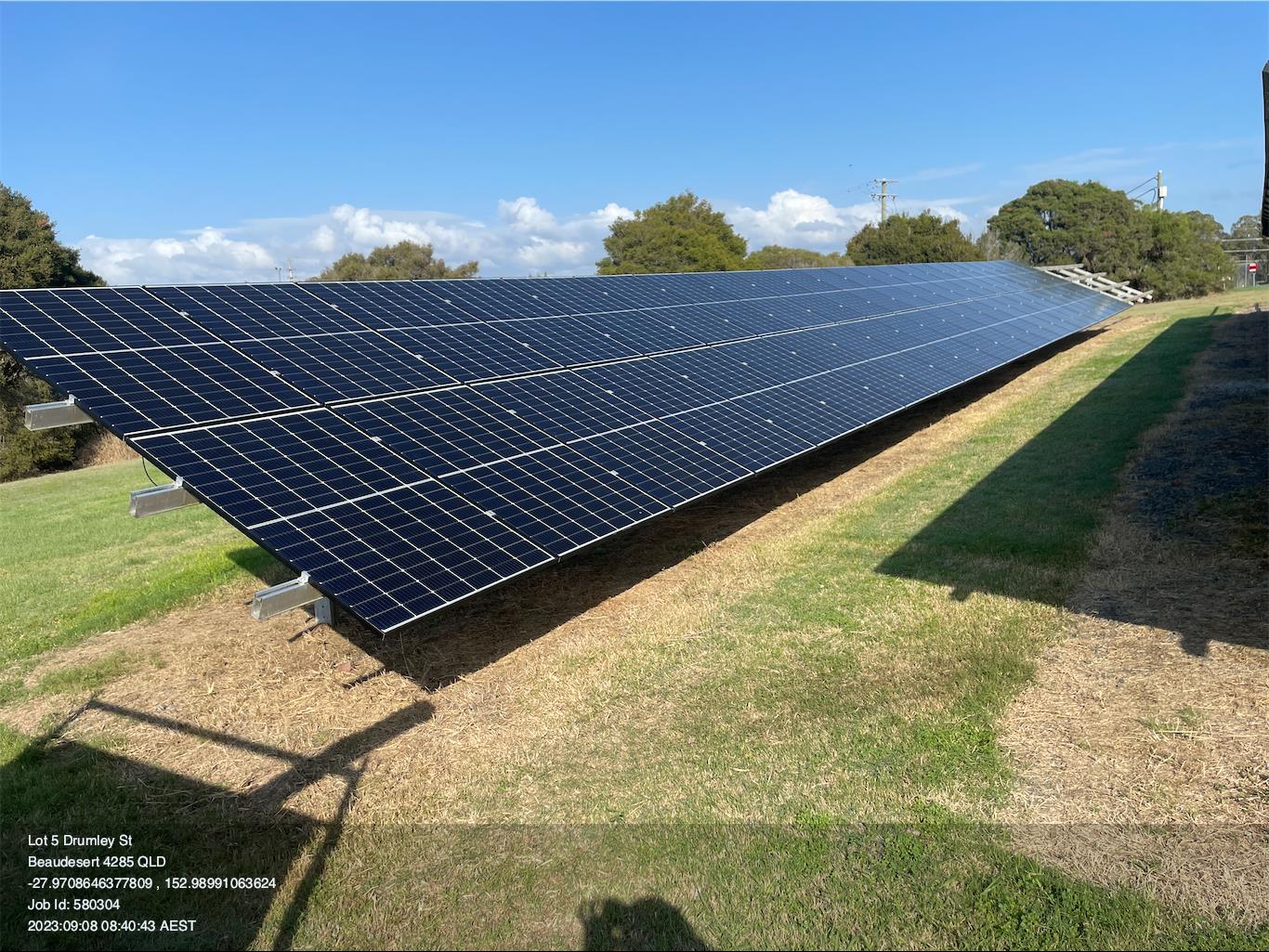
To promise that your system performs at its peak from the first day of operation, a seamless installation procedure must be planned and carried out, from the initial site assessment to the final commissioning. The entire ground mount solar installation procedure usually takes 2 - 4 days.
Site preparation (clearing, grading):
The site assessment identifies the soil characteristics, sun access, and land appropriateness to start the installation.
Mounting structures and concrete foundations:
Depending on the kind of soil, concrete piers, ground screws, or ballast systems are then used to establish the foundation.
Panel and inverter installation:
The solar panels are fastened to frames composed of aluminium or galvanised steel for the mounting structure assembly. Moreover, to ensure that the panels stay firmly linked to the frame during panel installation, technicians employ specialised clamps and fasteners.
Trenching for wiring to the home/business system:
We then assemble panels to allow power conversion through electrical connections to inverters. Before the system is ready, it is tested and put into service to ensure its safety and functionality.
How Much Does Ground Mount Solar Cost in Australia (2025)?
The average cost of ground mount solar mounting is between $1.50 and $2.50 per watt. The size of the system, location, kind of panel, and complexity of installation all affect costs. Here is a general breakdown to help you plan:
System Size
Estimated Cost
3 kW- 5kW
$4,500 - $12,500
10 kW- 15 kW
$15,000 - $37,000
20 kW
$30,000 - $50,000
30 kW
$45,000 - $75,000
50 kW+
$125,000+ (depends on scale)
Claim Government Rebates for Ground Mount Solar
Want more savings benefits on your ground-mounts? Ground mount solar systems in Australia qualify for many government incentives. Small-scale technology certificates, or STCs, are available to businesses and homeowners and can assist with lower upfront expenses. The immediate asset write-off program may also be advantageous to businesses. Moreover, some jurisdictions, such as NSW, VIC, and QLD, provide additional rebates and assistance programs. Ground-mounted systems are also eligible for feed-in tariffs, which let you get credits for extra electricity that is returned to the grid. System size, location, and usage all affect eligibility and rebate amounts, so it's a good idea to verify local regulations with an authorised installer.
Say Yes To Batteries For A Ground Mount Solar Setup
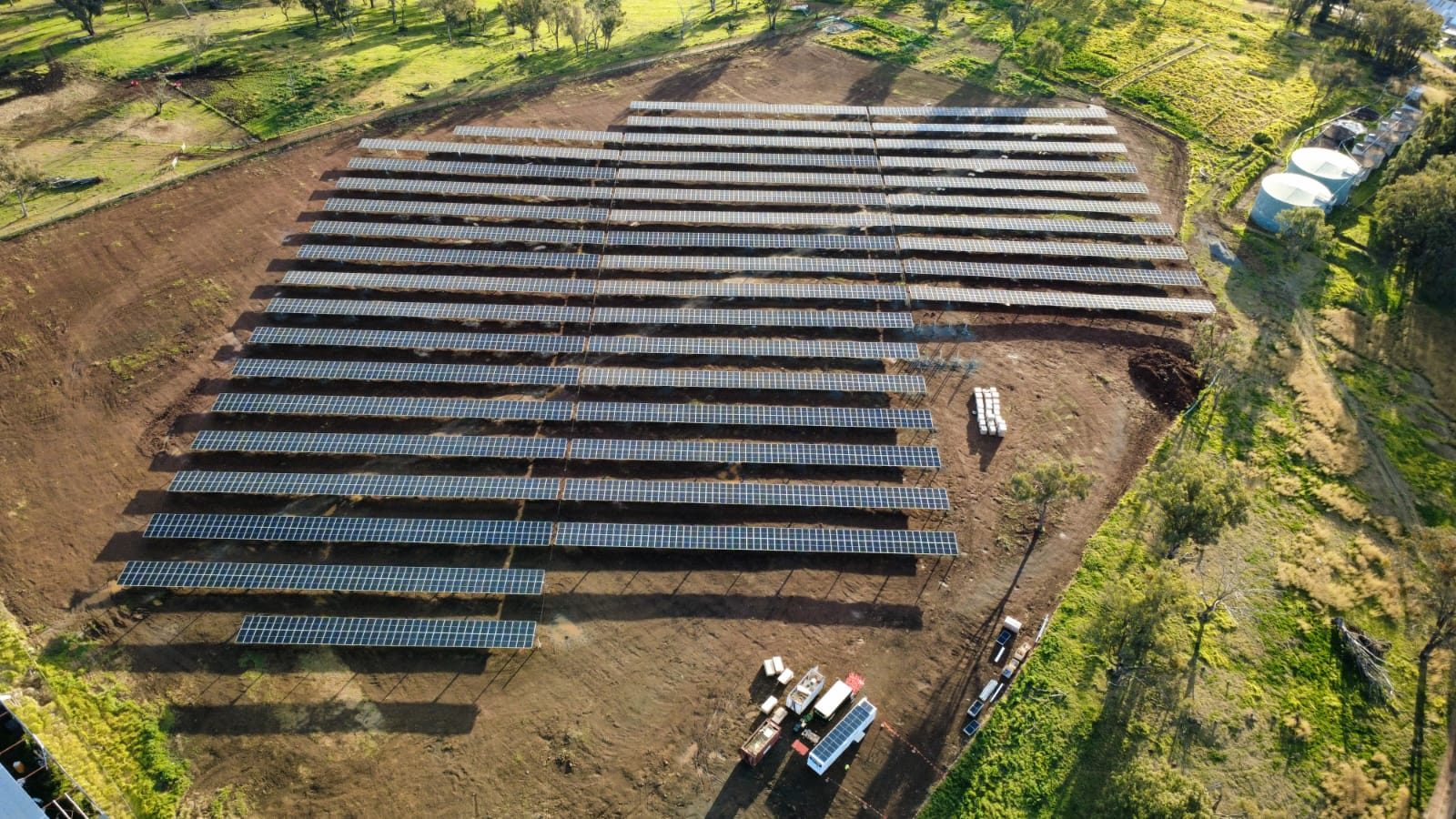
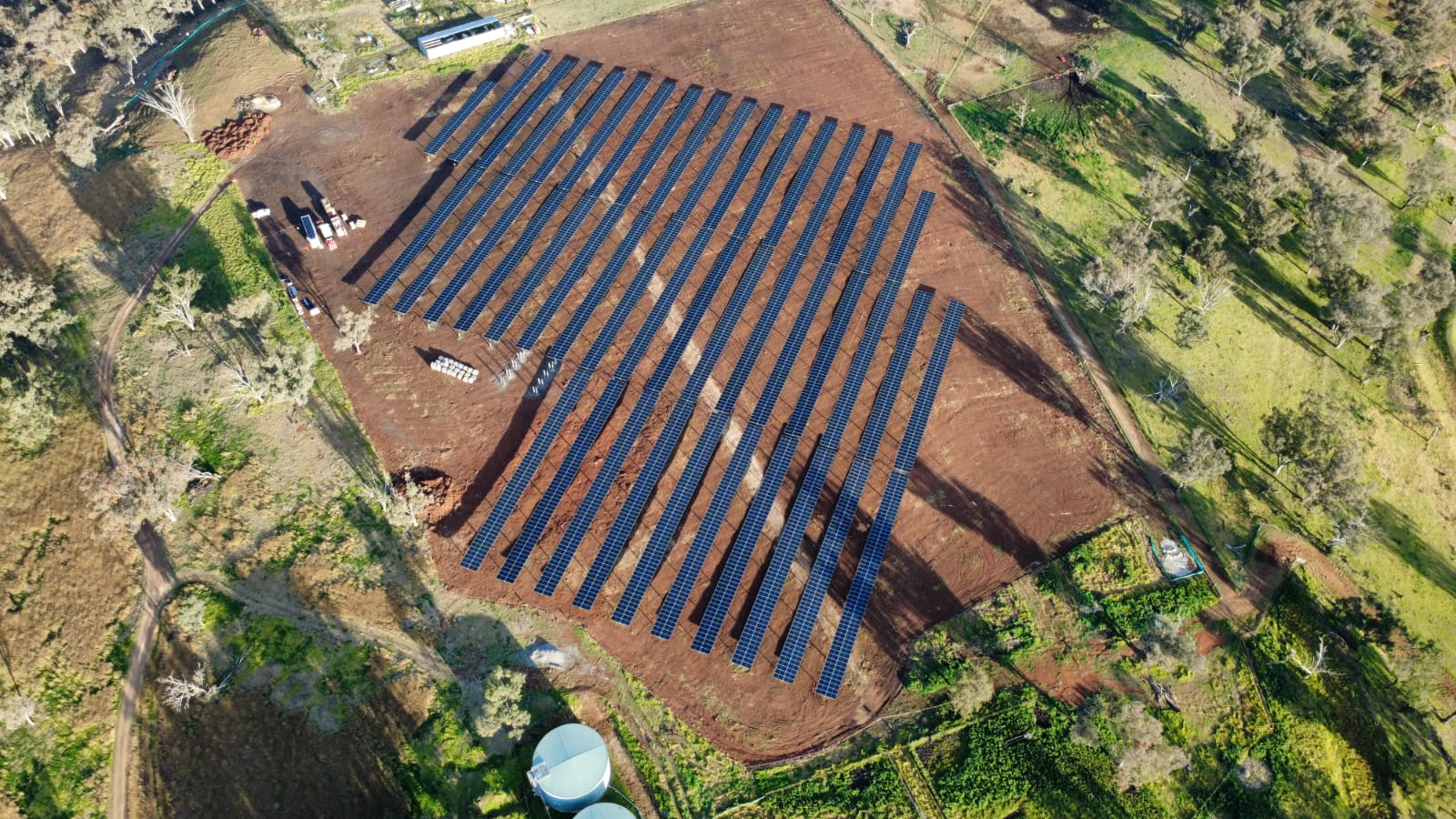
Businesses can store extra energy for later use by adding a battery to their solar ground mounting system, especially during periods of high demand or power outages. When the sun isn't shining or there is a blackout, solar panel batteries provide dependability by addressing variations in energy production and consumption. It offers:
- Store excess solar power for use at night or during cloudy weather.
- Save more with time-of-use tariffs by using stored energy during peak hours.
- Reduce reliance on the grid and protect against blackouts.
- Maximize your solar investment by using more of what you generate.
- Add long-term value and energy independence to your property.
Additionally, Australia provides battery incentives, and solar batteries are a useful way to maximise solar energy use in areas without net metering. Solar batteries can give much-needed backup in places with an unstable grid, increasing energy independence and lowering dependency on the utility grid.
Frequently Asked Questions
What’s the best angle for ground mount solar in Australia?
Do I need council approval for ground-mounted solar?
Can I install ground solar on sloped or uneven land?
Is maintenance easier for ground mount than rooftop solar?
Can businesses and farms install ground-mounted solar?
Ready to Power Your Business with Sustainable Energy?
Let's take the first step towards a brighter and greener future.
