Big News for Business Solar: SRES Rebate Now Covers Systems 10x Larger
.jpg)
The commercial solar landscape in Australia is set to undergo a big shift. As of 1 October 2026, the Australian government plans to extend the Small-Scale Renewable Energy Scheme (SRES) program such that solar installations up to 1 megawatt (MW) in size become eligible for upfront incentives, instead of the former 100kW size limit.
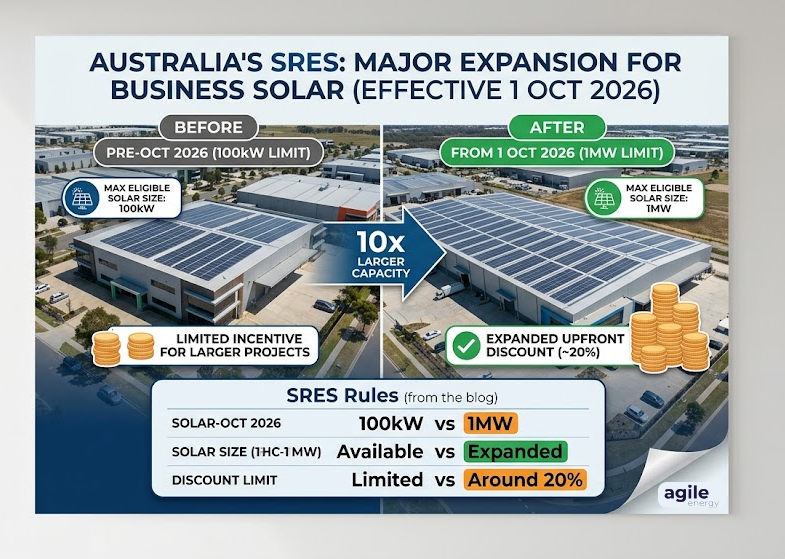
The SRES commercial solar rebate scheme would allow people to save about 20% on the upfront installation cost. This would make larger solar installations more financially accessible to businesses in the country. For those companies that have already encountered difficulties making their solar projects either too big for the SRES or too small to fit into larger schemes, this may be an important development.
What Is the SRES and What's Changing?
The Small-scale Renewable Energy Scheme (SRES) is a federal incentive scheme that is operated by the Clean Energy Regulator. This scheme assists eligible renewable energy systems by issuing certificates with financial worth and can offset the installation costs.
The most important modification to the scheme is that the system size threshold has been increased. So, a larger proportion of commercial rooftops qualify for the scheme now. The SRES expansion 2026 would ensure that larger solar installations at the commercial/industrial level will be included in the scheme.
It essentially means that businesses are now eligible for 100kW to 1MW solar rebate opportunities.
This makes it possible for companies to have a commercial solar rebate 1MW project without depending only on the large-scale certificate arrangement.
According to the government, the extension of the scheme is such that it will be budget neutral, with the certificates being purchased by electricity market players using the existing market-funded system.
Why This Matters: The “Missing Middle”
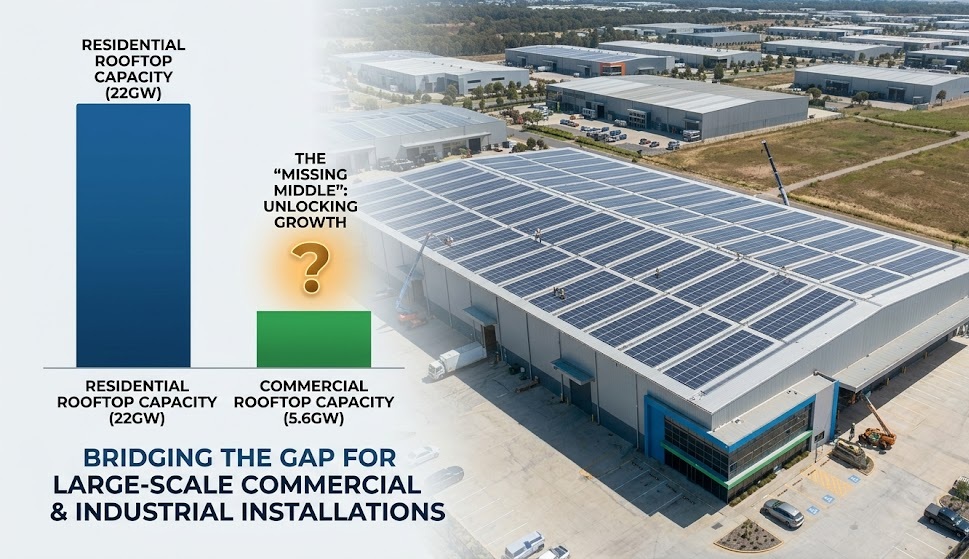
There has been phenomenal growth in rooftop residential solar capacity in Australia, although the same cannot be said of commercial applications. According to recent industry estimates, residential rooftop solar capacity amounts to around 22GW, while commercial rooftop solar stands at about 5.6GW.
This development can potentially provide great benefits for companies that are interested in establishing rooftop installations that do not fit into the large-scale renewable energy arrangements. When assessing commercial solar incentives in Australia, the extended SRES can make the investment more attractive.
In facilities that consume large amounts of electricity, this may also make projects like the industrial solar panel installation more appealing, especially if the solar energy can offset much of the daytime usage.
The extended SRES will help them cover the gap. Companies considering commercial solar installations may be able to install larger panels with an up-front incentive. This will help improve the project’s economics.
How Much Does the SRES Rebate Save Businesses?
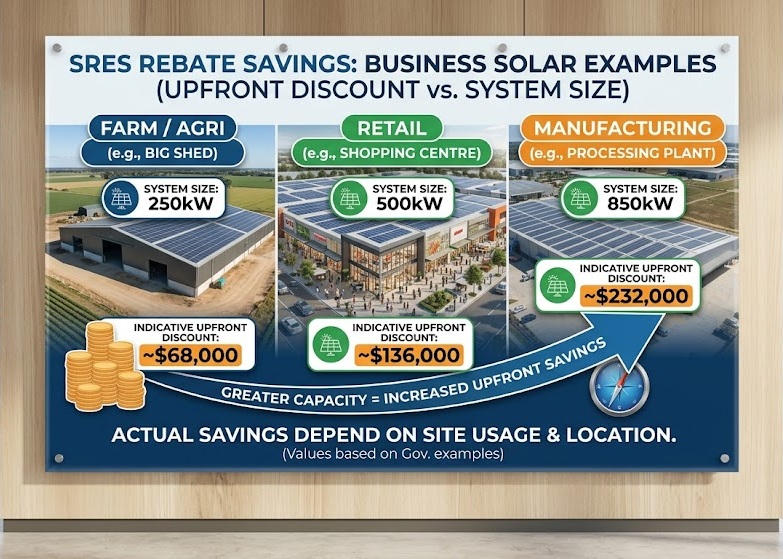
With the expanded program, it would help make the case for solar more economically attractive because of the reduced amount of money needed upfront to install the systems. For companies that are studying their options for a business solar rebate Australia, the value depends on several elements.
For instance, the 250kW system would produce roughly 345 MWh per year, while the 850kW system would produce about 1,173 MWh per year based on the government's example scenarios. The actual amount of power generated and money earned will be different depending on a number of factors, such as solar resource, location, load profile, electricity tariffs, and system design.
Even if the incentive reduces capital expenditure considerably, businesses should evaluate the incentive along with future energy savings to be achieved from the investment.
Who Is Eligible?
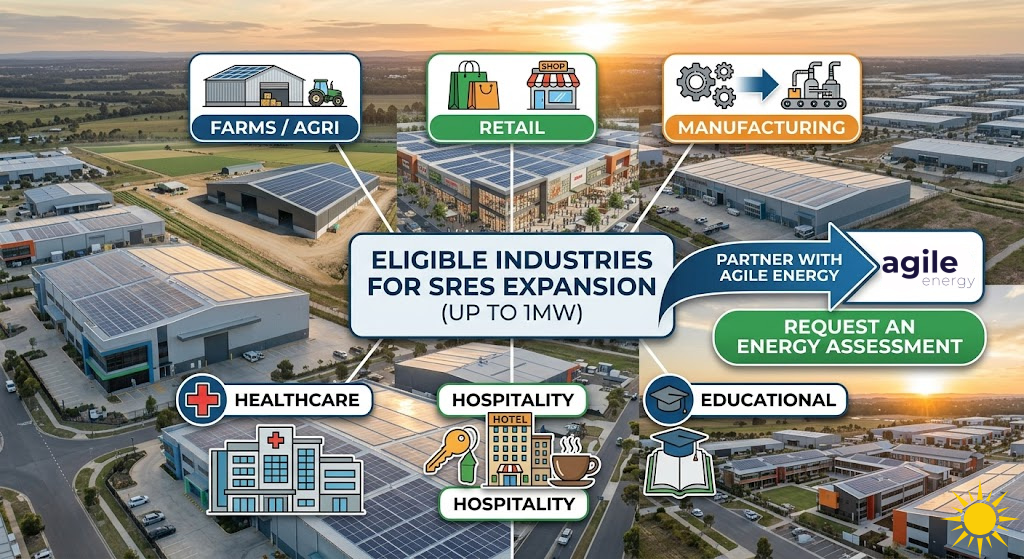
The new program is expected to make it easier for bigger solar projects to be available to all kinds of companies in Australia. Possible beneficiaries are:
Farms/agriculture-related organisations: Big shed structures and farms can utilise solar energy on their rooftops to cut down on their electricity or diesel consumption. Agile Energy has even considered solar-battery PPAs for remote farms.
Retail businesses: Shopping centres, stores, as well as other large commercial property portfolios with multiple sites, can use solar power to cover their significant energy consumption during the daytime. The 100 kW rooftop installation provided by Agile Energy for Centuria McNab proves this point.
Manufacturing: Energy-intensive manufacturing plants will find it advantageous to invest in bigger installations that balance out the power requirements during daytime. The case of Ballantyne Foods is indicative of the capacity of Agile Energy in handling a major installation at such short notice.
Healthcare: Hospitals and aged care institutions have high electricity demands that may be sustained. The Nexus Hospitals case study highlights how customised solar systems could help save energy in such settings.
Hospitality: Hotels, restaurants, and other hospitality businesses may also be eligible where there is a high load during the day, and solar power becomes economically viable. This technology can further assist where there is electricity consumption after sunset.
Eligibility for the program will be determined by the particular installation, equipment used, accreditation, location, and SRES requirement. This makes it necessary for a business to determine its eligibility before investing.
Key Dates & Fine Print
The extended SRES eligibility is supposed to start from 1 October 2026. The expansion is intended to take place within the current certificate system as opposed to coming up with a completely new rebates system.
The Clean Energy Regulator will be responsible for the management of SRES, thus making sure that there is an effective regulatory regime for the creation of certificates and adherence to the SRES regime.
There is also an important difference between the rebate payment and the economics of the entire project. It does not mean that every project with a capacity of 1MW will be paid the same money.
According to the government, the expenses related to the expansion of the grid will not significantly affect the electricity bills, which are predicted to increase by about $1-$2 per year, with the expenses being reduced as time goes by up to 2030.
How to Claim It: Next Steps with Agile Energy
In the event that organisations consider taking advantage of this, then preparations must be made even before the start date in October. Large-scale projects need more than just panel installation, since they could include structural inspection, energy analysis, and systems design.
Agile Energy partners with business clients from Australia in the deployment of solar and battery systems, which include project assessment, engineering, installation, and financing choices. The company's commercial solar and battery rebates resource is helpful in assisting the client in determining how federal and state incentives can be incorporated into an overall energy solution.
The initial process includes analysing one’s electricity usage, roof space, operation schedule, pricing schedule, and long-term energy needs. Based on this, an energy assessment will determine the ideal size of the system and financial gain.
Agile Energy can assist companies in determining their energy needs and finding viable solar and battery options. In addition, the company’s commercial solar battery rebates guide can be of assistance in understanding how these existing incentives can be incorporated into the company’s energy strategy.
Request an Energy Assessment to learn about the opportunities for your property’s solar viability, savings, and incentives.
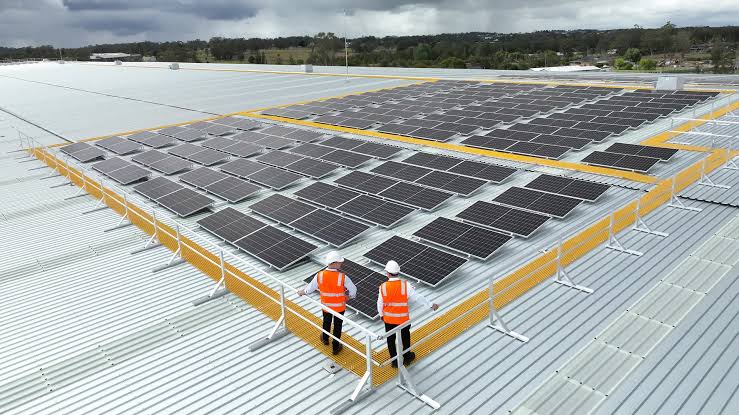
How Big a Commercial Solar System Do I Need? A Sizing Guide for Australian Businesses
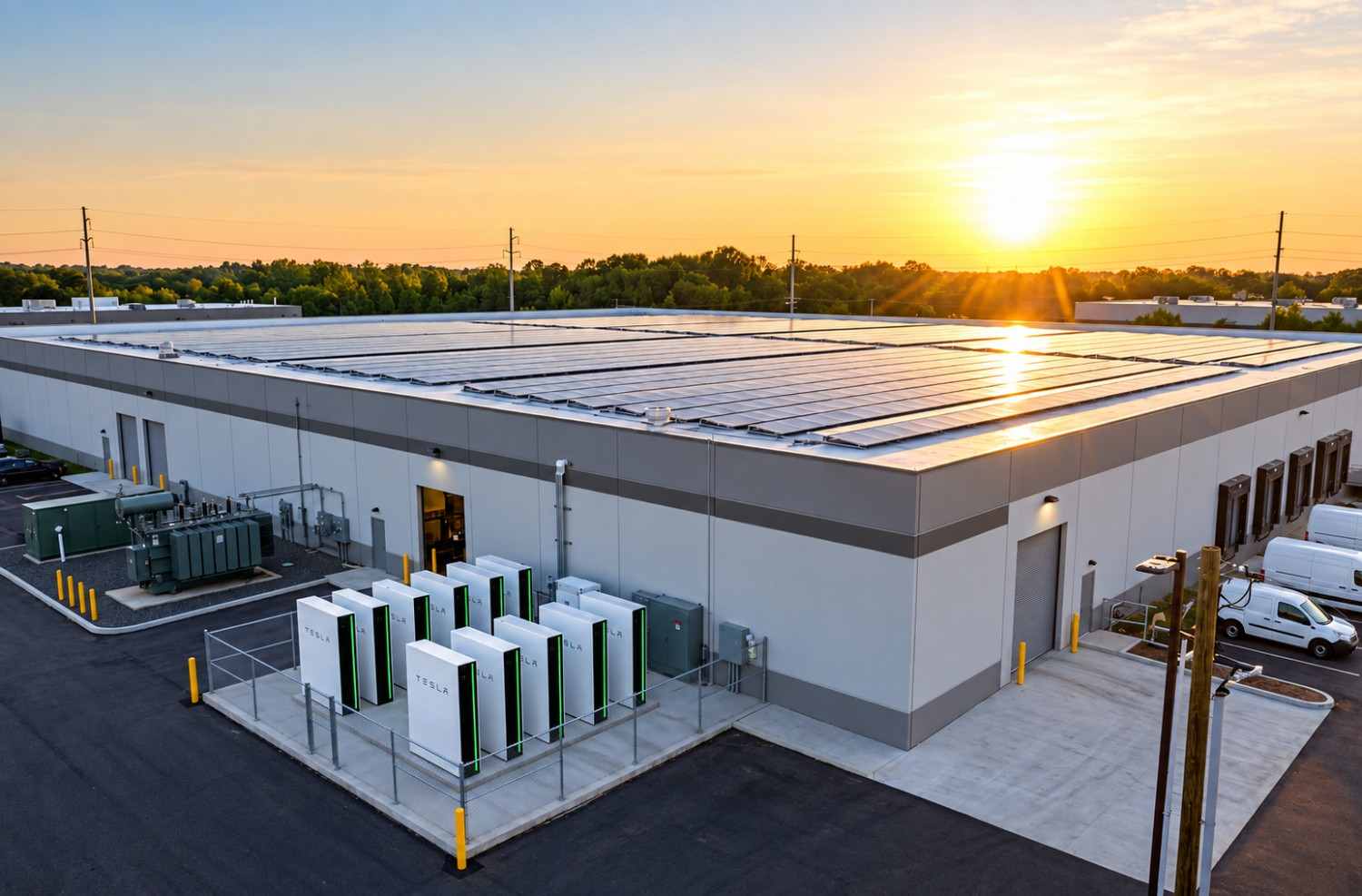
Solar and Battery vs Solar Only: When Does the Extra Cost Pay Off?
Agile Advantage Ed.22 - When Power Fails, Product Fails: Energy Resilience in Cold Chain

Agile Boardroom 7 - 2026 Energy Risk: A Framework for Reliability, Cost and Continuity

Agile Advantage Ed.21 - From Backup to Strategy: Batteries as business Continuity Infrastructure
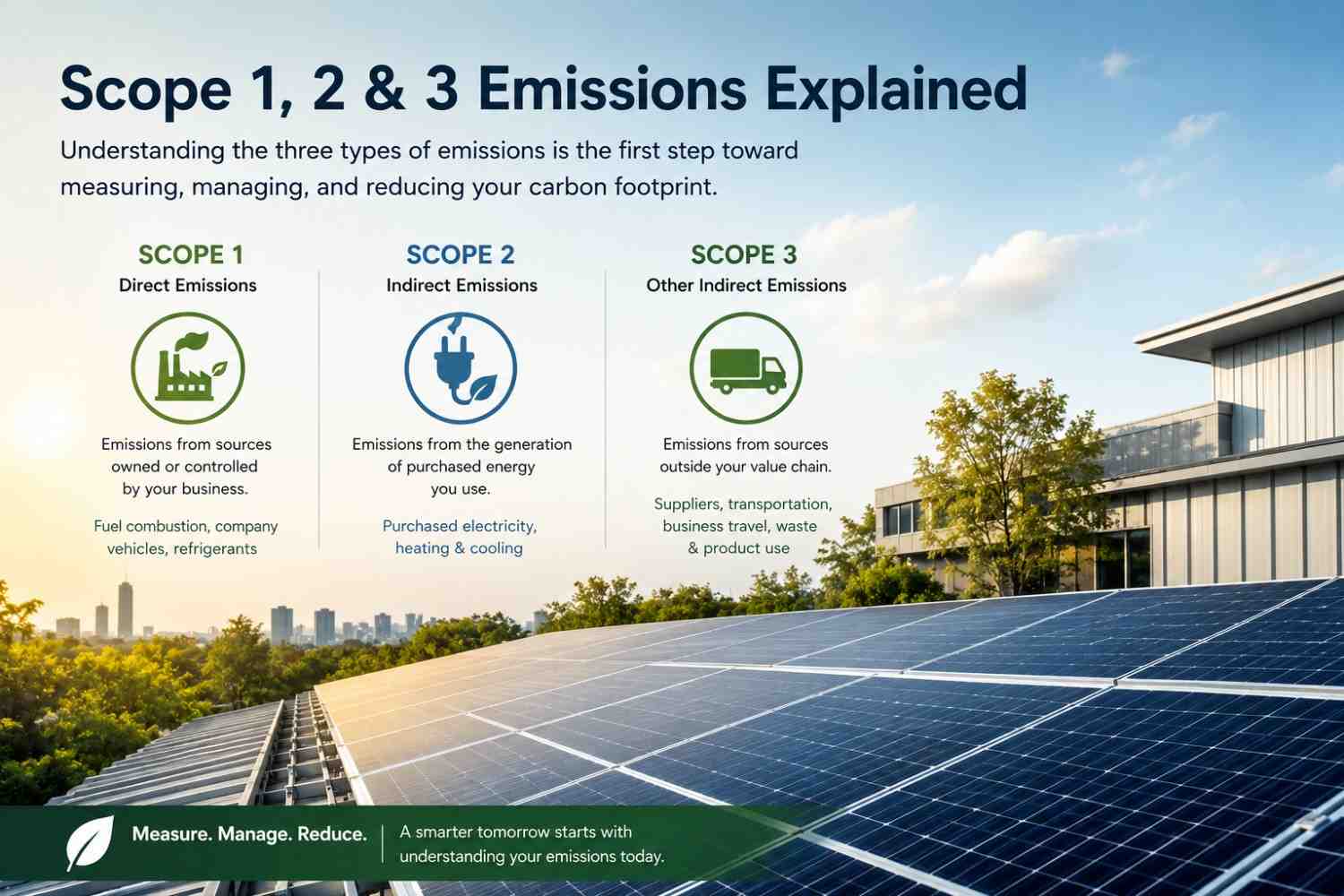
What Are Scope 1, 2 and 3 Emissions?

What Is Carbon Offsetting and Should Businesses Use It?
What Is RE100 and Should Your Business Join?
How Can Businesses Reduce Peak Demand Charges?
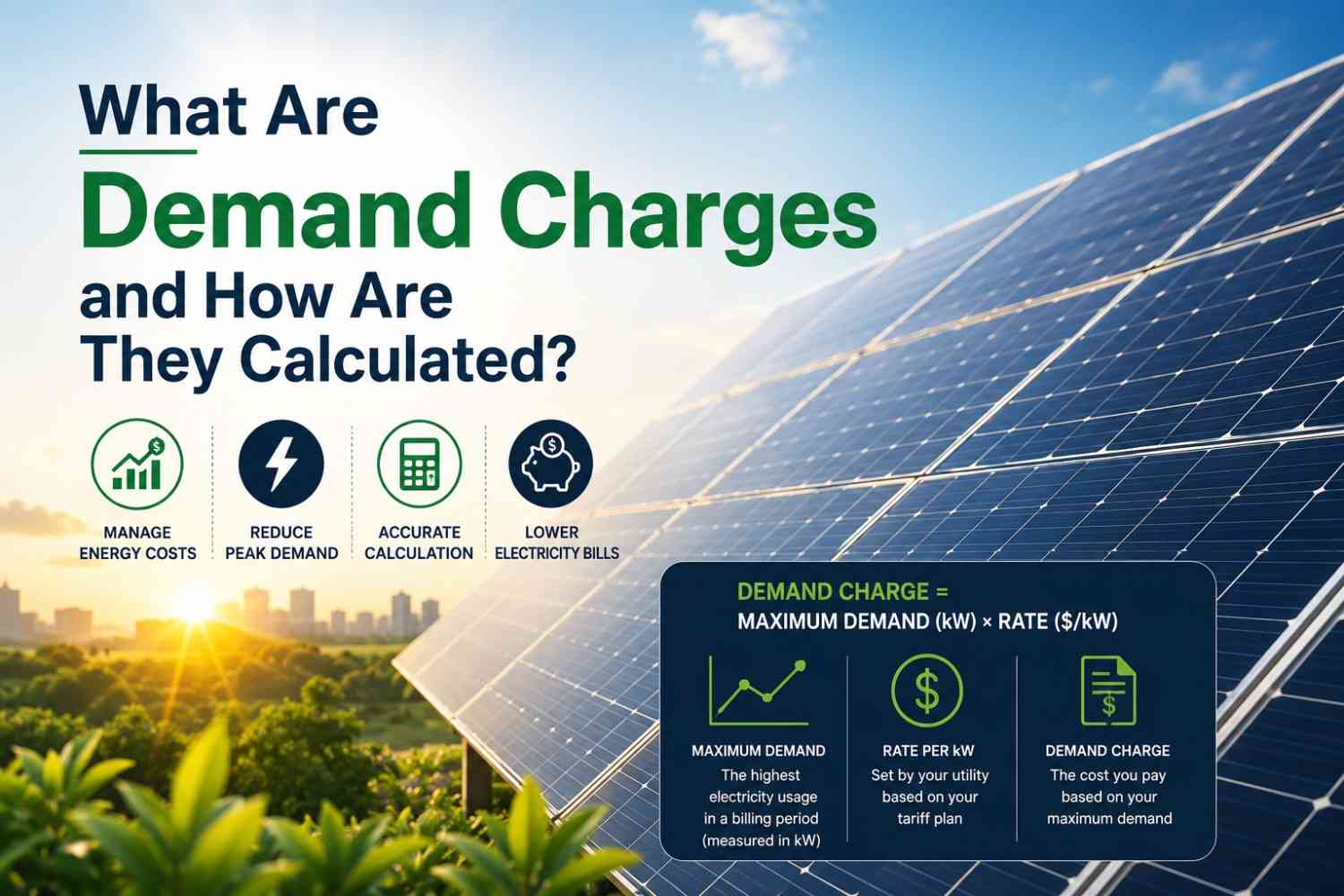
What Are Demand Charges and How Are They Calculated?
What Is Commercial Energy Procurement? A Guide for Australian Businesses

Agile Boardroom 6 - Where should capital go? Core Business vs Energy Infrastructure

Agile Advantage Ed.20 - Energy Security for Australian Businesses: Operating Through Global Instability

Is Your Business Too Dependent on the Grid? Here's What to Do
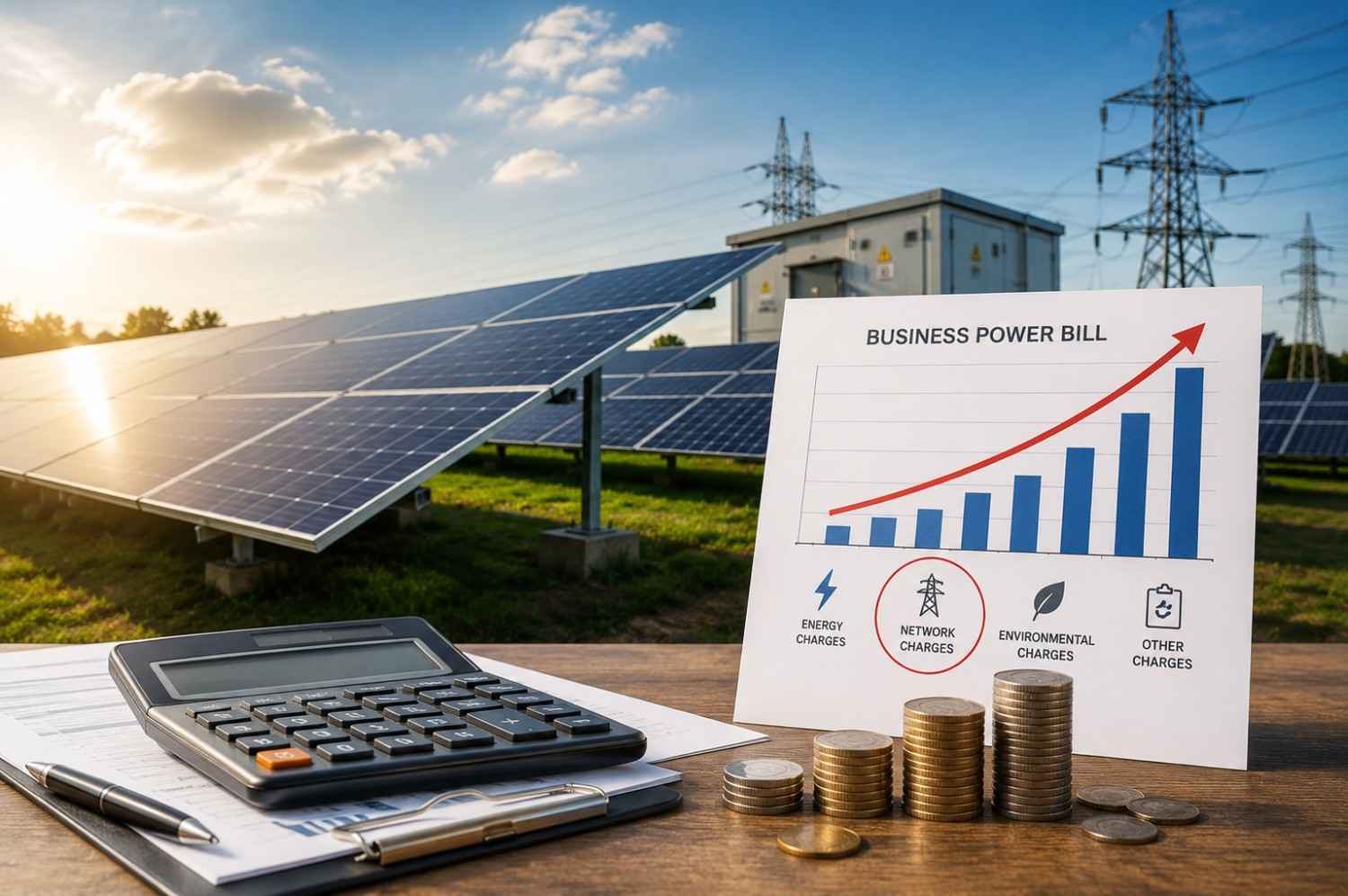
Network Charges Explained: The Fastest-Growing Cost on Your Business Power Bill

Agile Boardroom 5: Energy as competitive advantage in private equity portfolios

Agile Advantage Ed.19 - The End of Cheap Diesel: What Businesses Need to Know
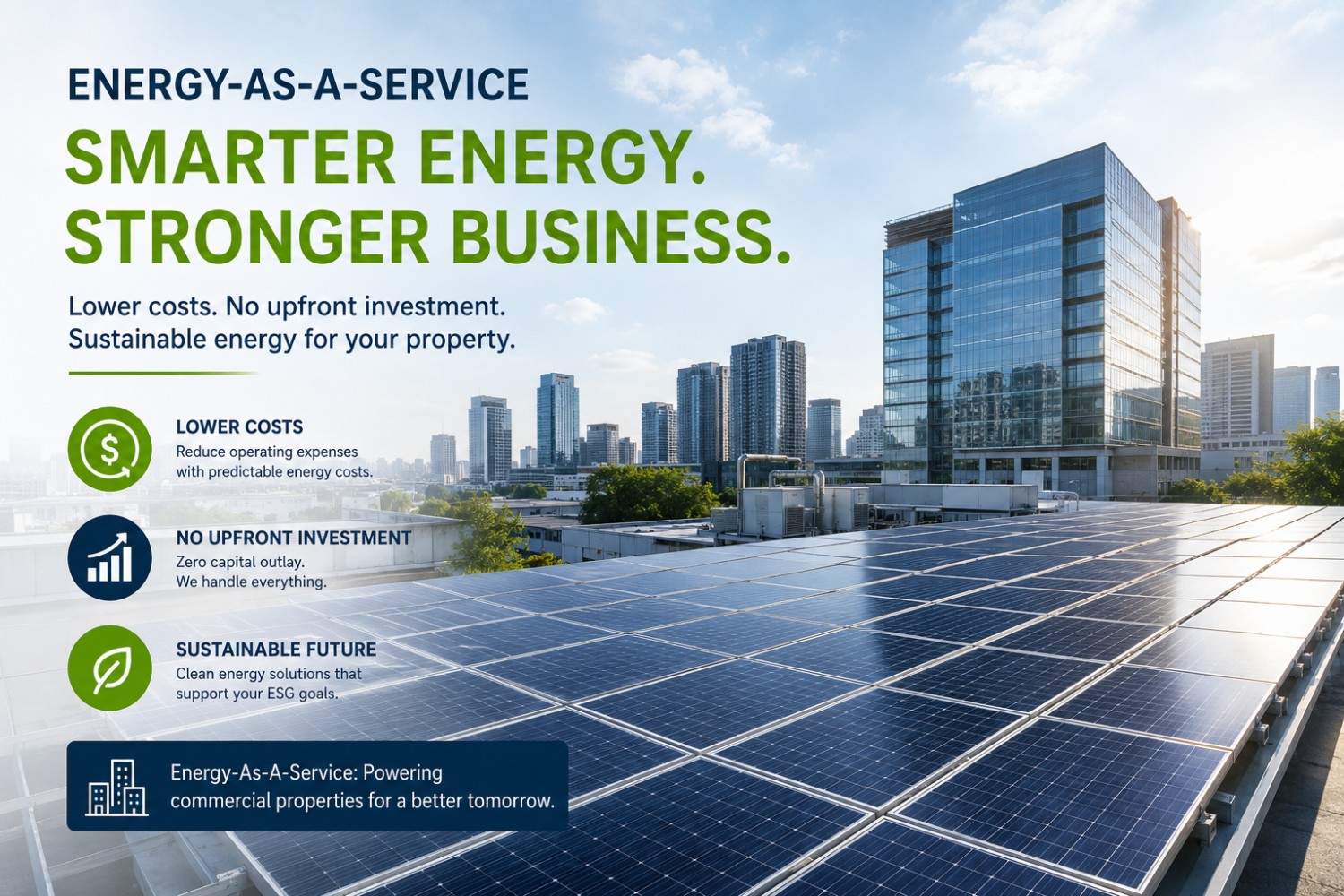
Energy-as-a-Service Explained for Commercial Property Owners

Agile Boardroom 4 - Geopolitics meets energy: What CFOs must factor into energy strategy

Agile Advantage Ed.18 - Keeping Production Running: Battery Storage for Outage Management in Manufacturing

Agile Boardroom 3 - The Bankable PPA: What Lenders, Boards and Investors actually require

Australia is experiencing a clean energy revolution as commercial and domestic landlords turn rooftops into revenue
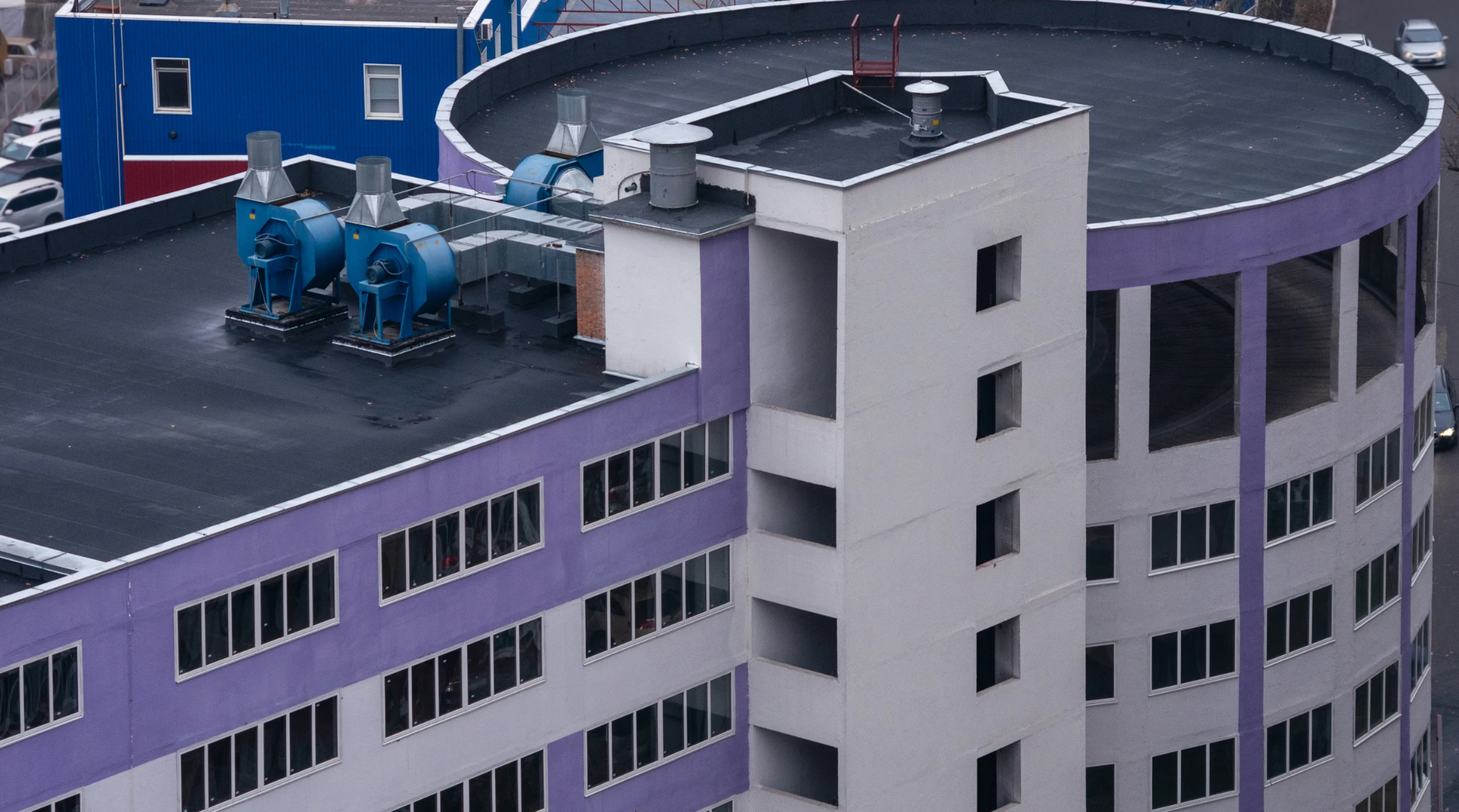
Landlords turn to rooftop solar to yield income

Commercial landlords turning rooftops into ‘profit machines’ through solar installations

Solar PPA for Schools: Reduce Electricity Costs Without Upfront Investment
Agile Energy Featured on Business Essentials Podcast
.png)
Schools access cheaper electricity
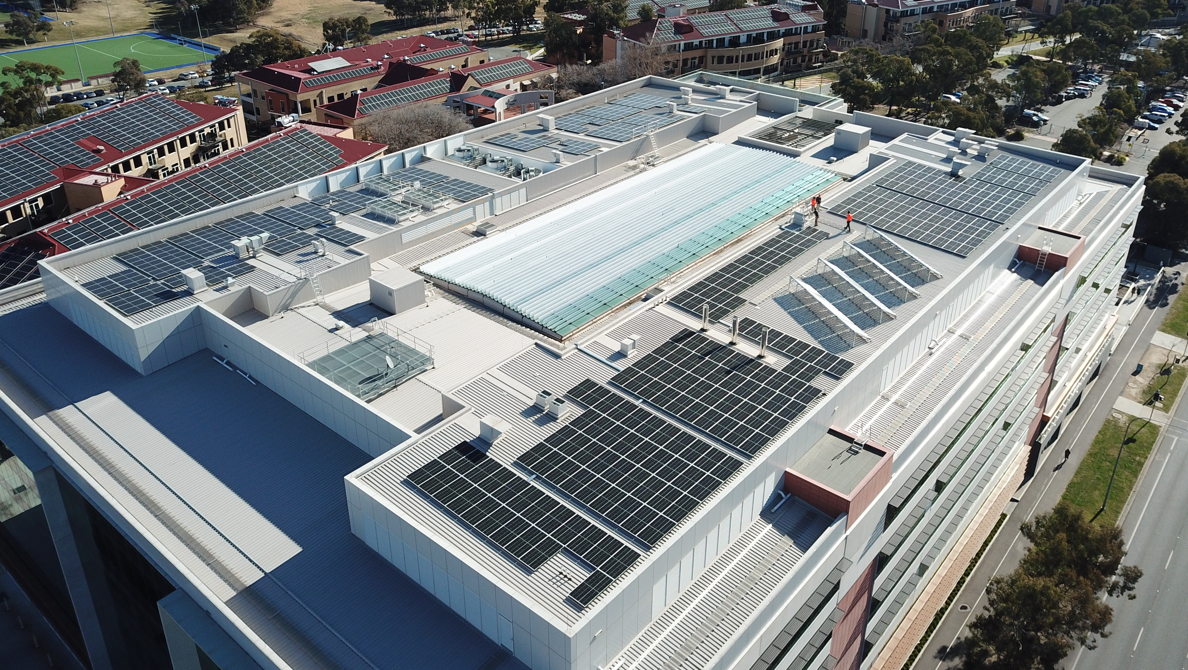
Australia undergoes a clean energy revolution as commercial and domestic landlords turn rooftops into revenue
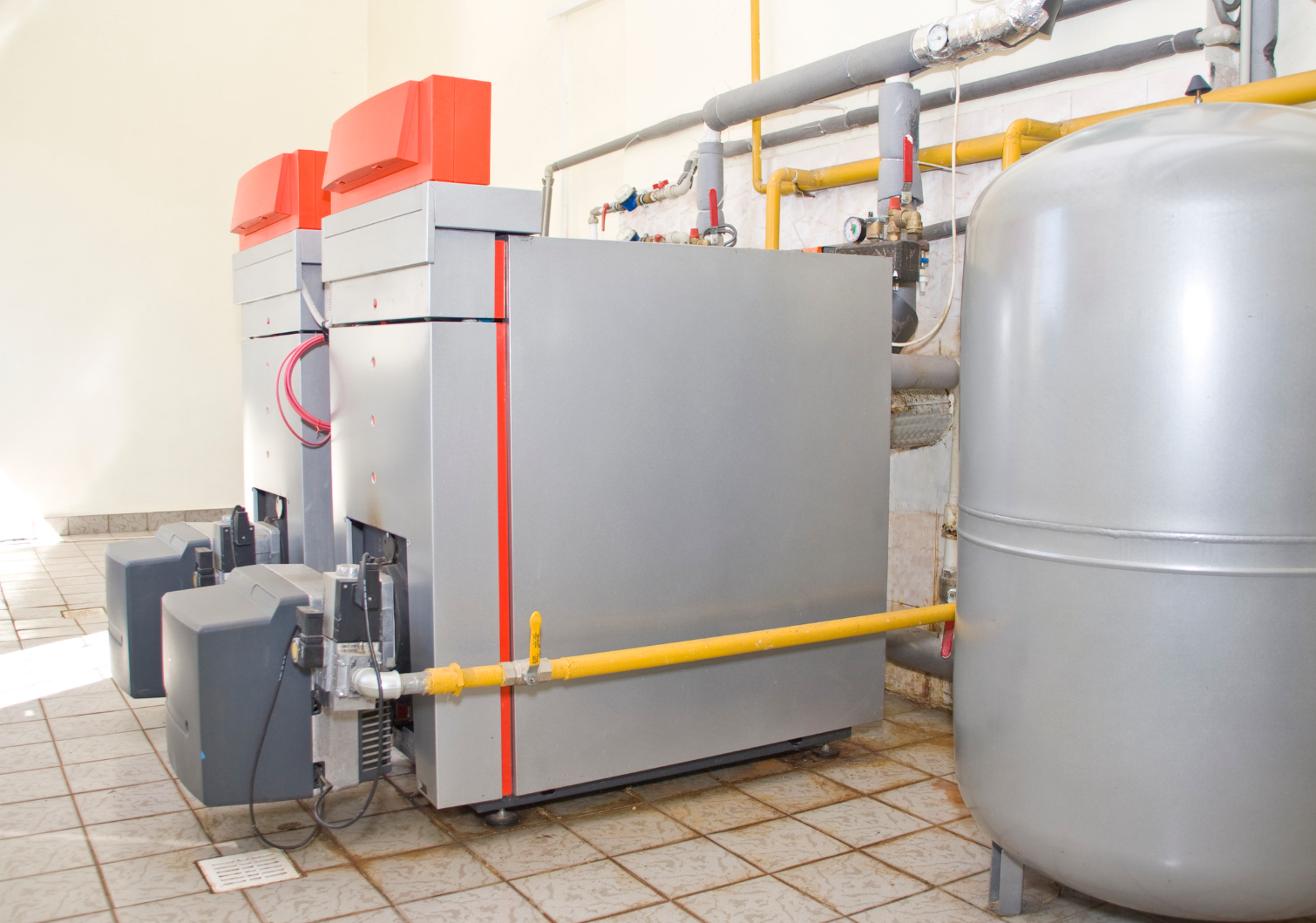
Agile Advantage Ed.17 - Solar for Process Heat: Replacing Gas Boilers in Food and Beverage Manufacturing

5 Reasons Why Capital-Funded Solar is the Safest Energy Transition Strategy in 2026
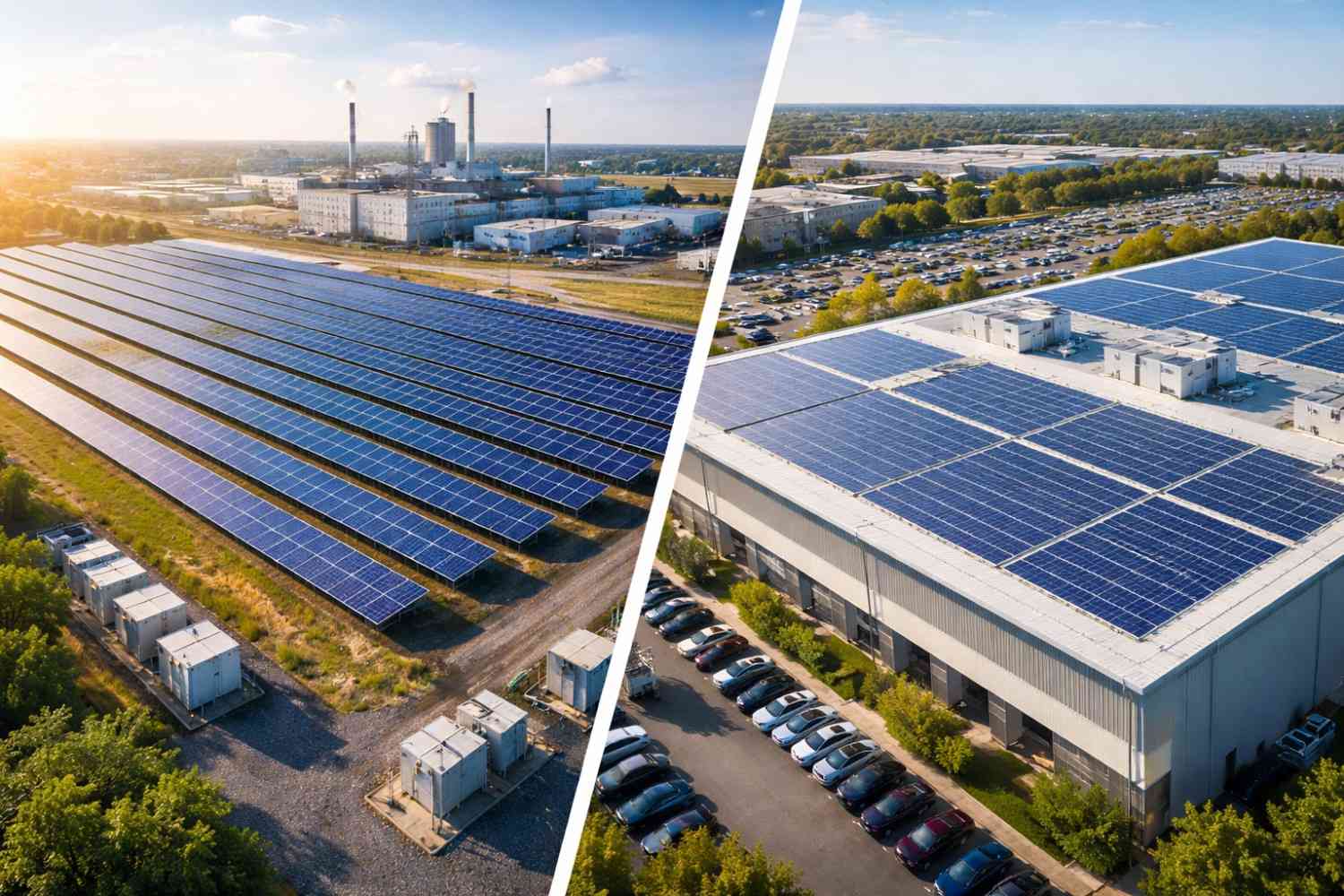
Industrial vs Commercial Solar Systems: Which Energy Solution Is Right for Your Business?

Agile Boardroom 2 - Solar + Storage Under Tight Operating Budgets: Education & Not-for-Profit
Agile Advantage Ed. 16 - Cutting Diesel Dependency: Solar battery PPAs for remote farming operations

Agile Boardroom 1 - A Competitive Advantage in Government & Enterprise Tenders: The Decarbonised Bid

Agile Advantage Ed. 15 - Winning the war on peak prices: Load Shifting, Storage and Smart Controls for C&I

The summer surge: How to keep energy bills cool when temperature rise

Agile Advantage Ed. 14 - The 2026 solar health check: From legacy systems to strategic assets
Solar vs Grid Energy Price Escalation: 2026 Outlook
Agile Advantage Ed. 13 - From energy users to market participants: How Agile businesses are monetising flexibility
Mandatory Climate Reporting: What CFOs need to know (2026–2028)

Agile Advantage Ed. 11 - Unlocking full value from solar & storage: The business case for batteries

End-of-Year Energy Audit: 10 ways to start 2026 leaner and cleaner

Agile Advantage Ed. 10 - Embedded Networks 101: Turning electricity from a cost centre into a profit centre
Top 5 Energy Incentives for Australian Businesses (2025)

Managing solar and battery rollouts for national portfolio

Risk management in renewables
Commercial solar ROI in 2026: Maximise your business savings

Scaling SAFe in large-scale energy organisations: How executives can harness the Scaled Agile Framework (SAFe) to accelerate the energy transition

Always-On Agile operating model for Australia’s energy transition

Integrated energy & carbon strategies: A Playbook for future-proofing Australian manufacturing

Weathering the storm: Protects solar assets from heavy rainfall risk
Transforming dead space into active assets: How Agile unlocks roofs, car parks, and land for revenue

Agile Advantage Ed. 9 - Why energy data is the new gold for Australian manufacturer
Solar Battery Rebate

Agile Advantage Ed. 8 - E is Everything: Energising Australian Businesses

Agile Advantage Ed. 7 - Riding the renewable wave: Why Australian businesses are embracing solar energy

Agile Advantage Ed. 6 - Why CFOs should prioritise renewable energy investments in 2025

Empowering Australian Businesses: Unlocking energy efficiency and sustainability

Agile Advantage Ed. 5 - Inspiring the young workforce: How rolling out renewables sparks motivation

The power of vertical integration in solar project delivery

Agile Advantage Ed. 4 - Making complex simple: Navigating the complexity of solar installations

Rising cost of insurance : Impact on solar assets

Monetising your solar assets: Converting pre-purchased systems into power purchase agreements (PPAs)

Agile Advantage Ed. 3 - The Magic of experience: Partnering for performance in renewables

Solar rooftop safety: Risk management guide

Agile Advantage Ed. 2 - Clear paths to carbon reduction: Renewables and more for Australian businesses

Agile Advantage Ed. 1 - Seven deadly sins of solar installations: Mistakes businesses must avoid

CEO's view on managing increasing energy costs

What are Small-scale technology certificates (STC)?

Carbon Accounting and your business

Join Agile Energy at the Healthcare Real Estate Summit

Carbon Projects - Where to Start?

TRADE ACCUs WITH US! From the desk of Equipoised Group
Ready to power your business with Sustainable Energy?
Let's take the first step towards a brighter and greener future.